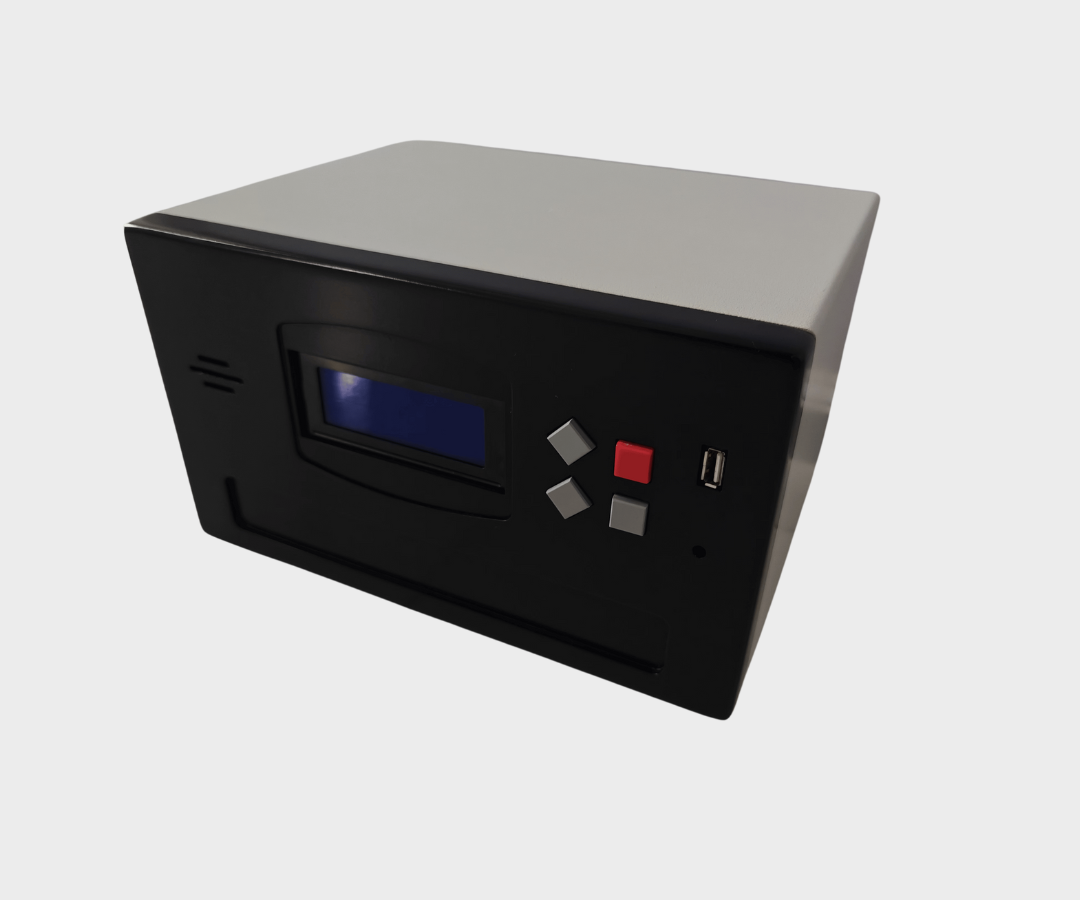
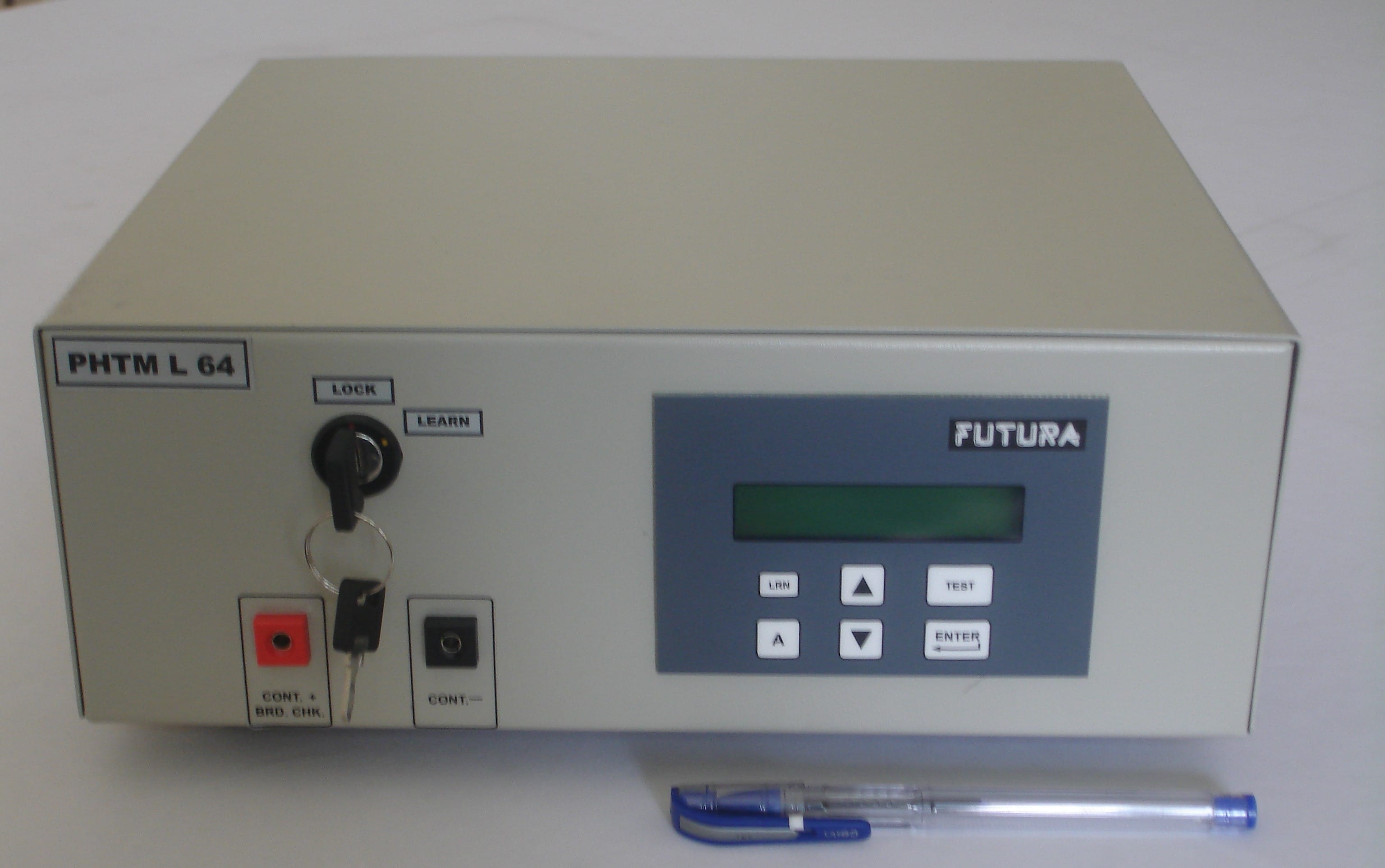
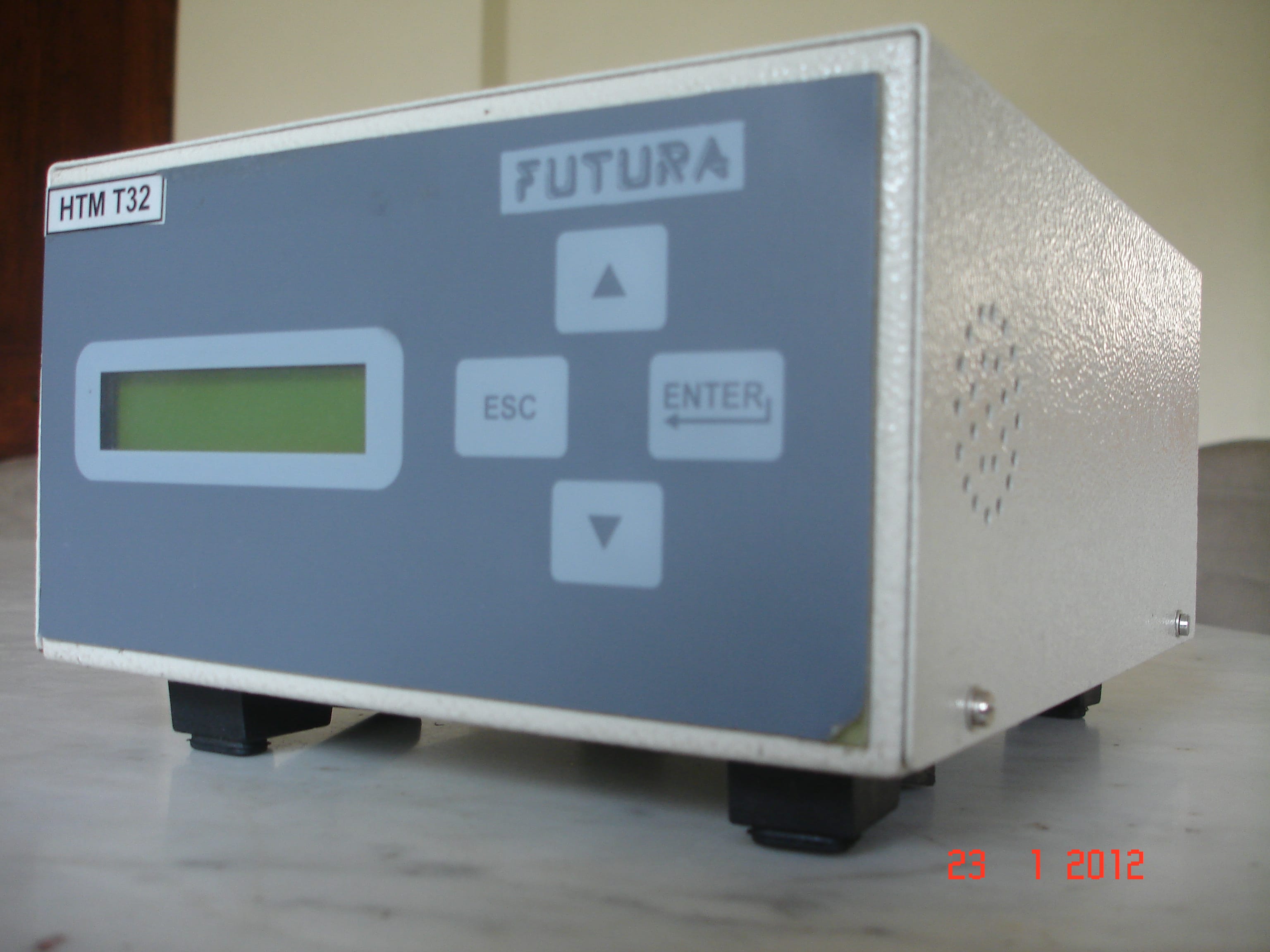
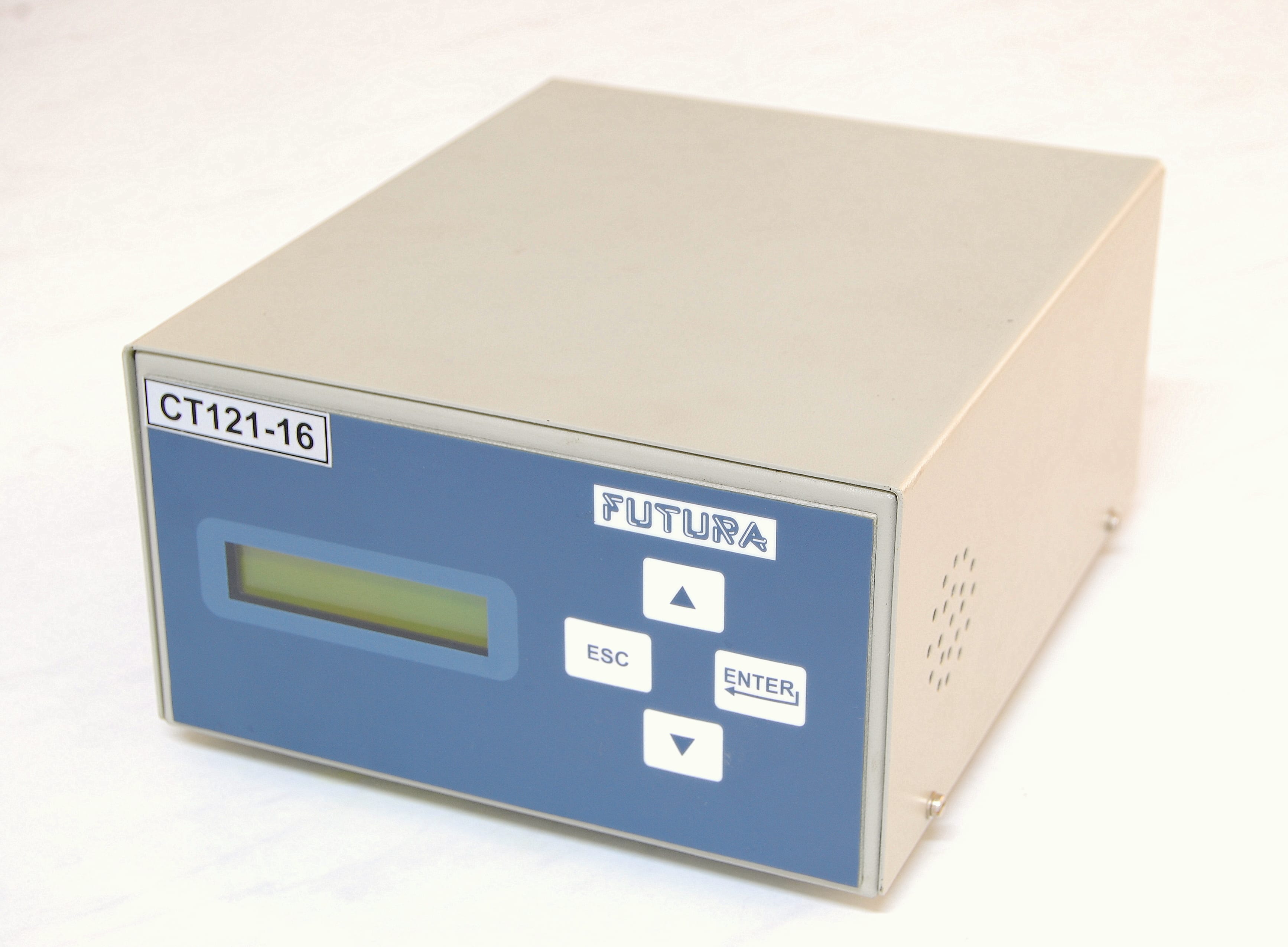
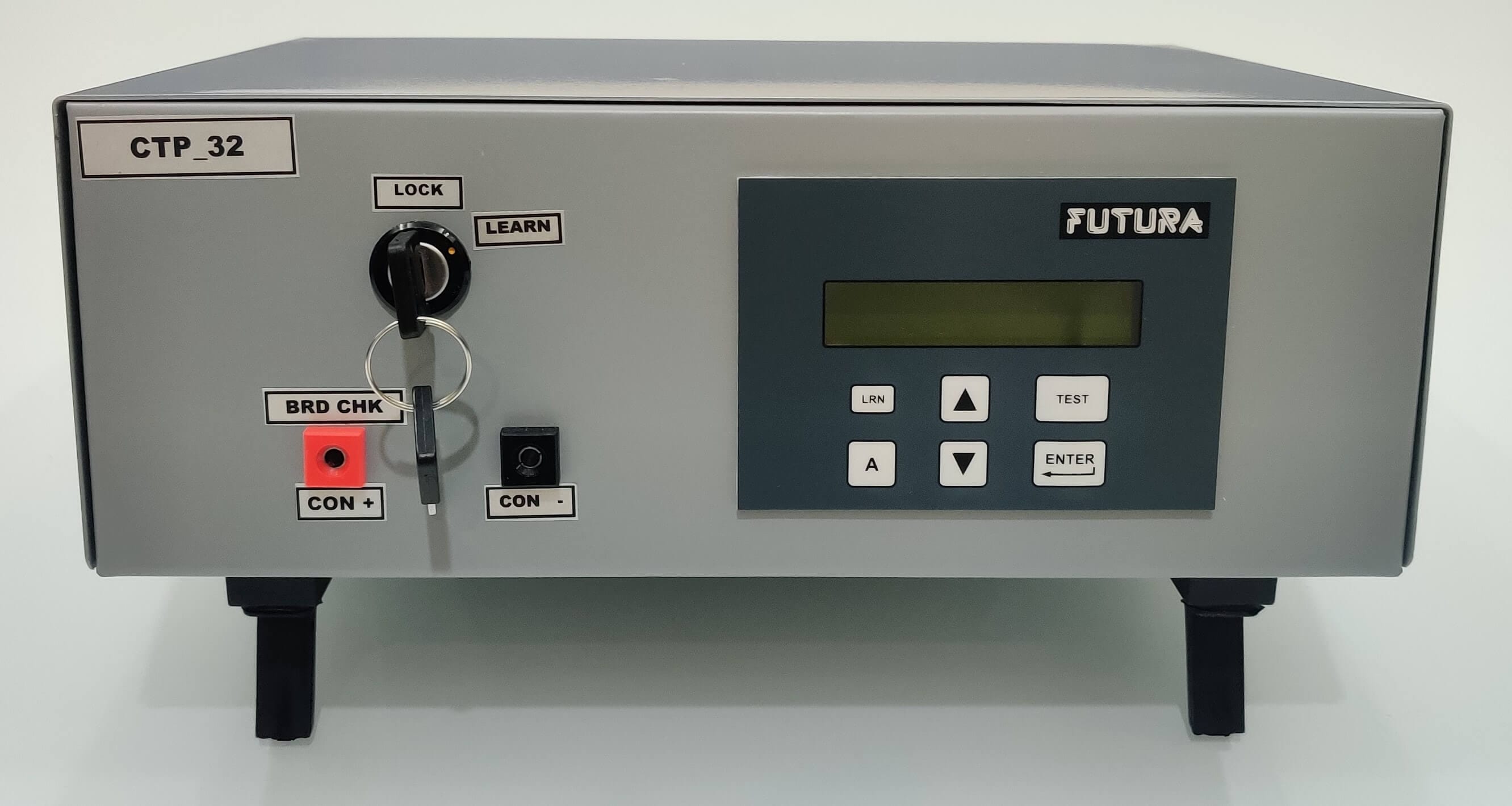
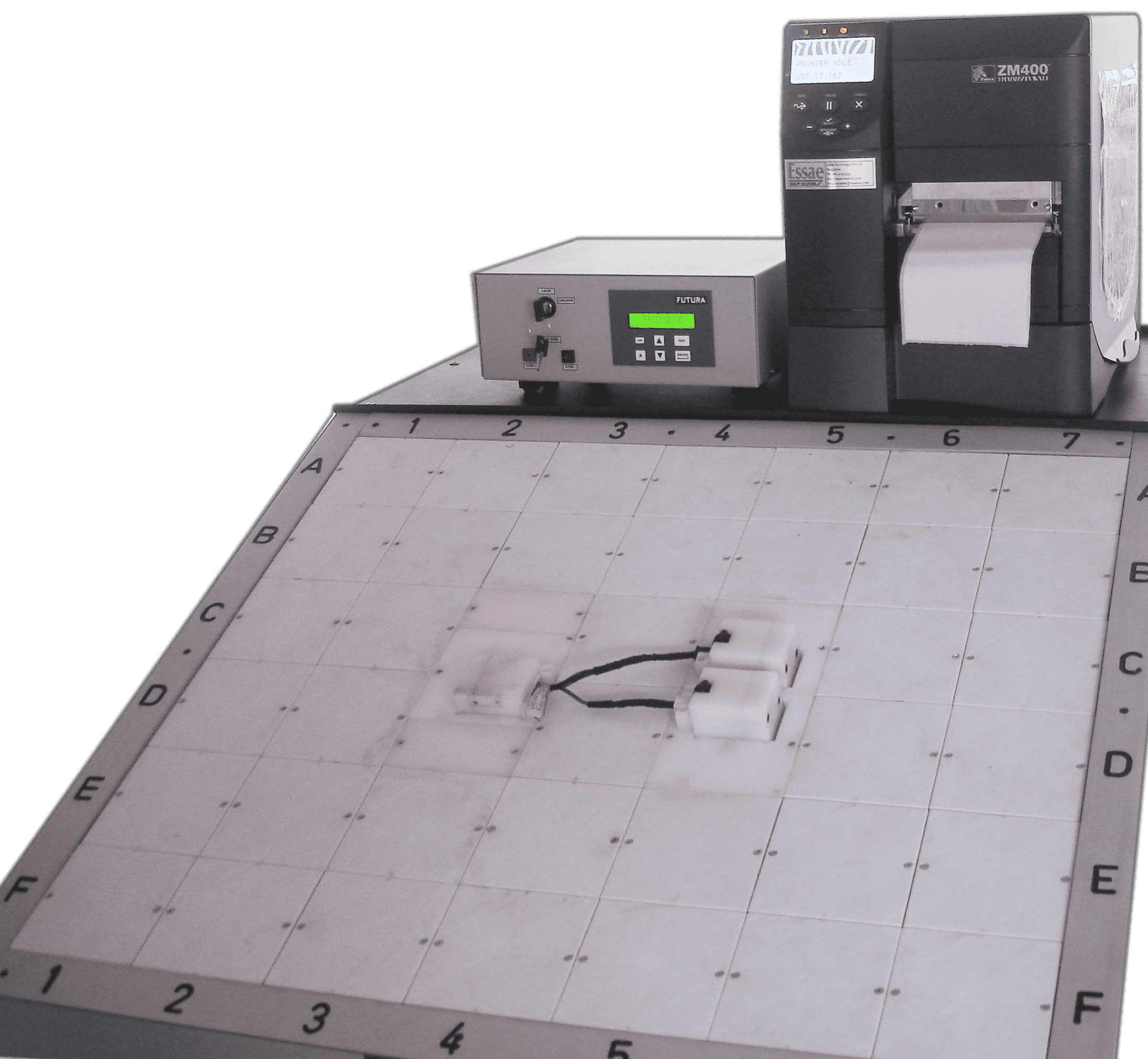
A wiring harness tester, also called a cable harness tester or continuity checker, is an electronic test system used to verify electrical connections in cable assemblies and wire harnesses. It identifies faults such as open circuits, short circuits, and incorrect or interchanged connections.
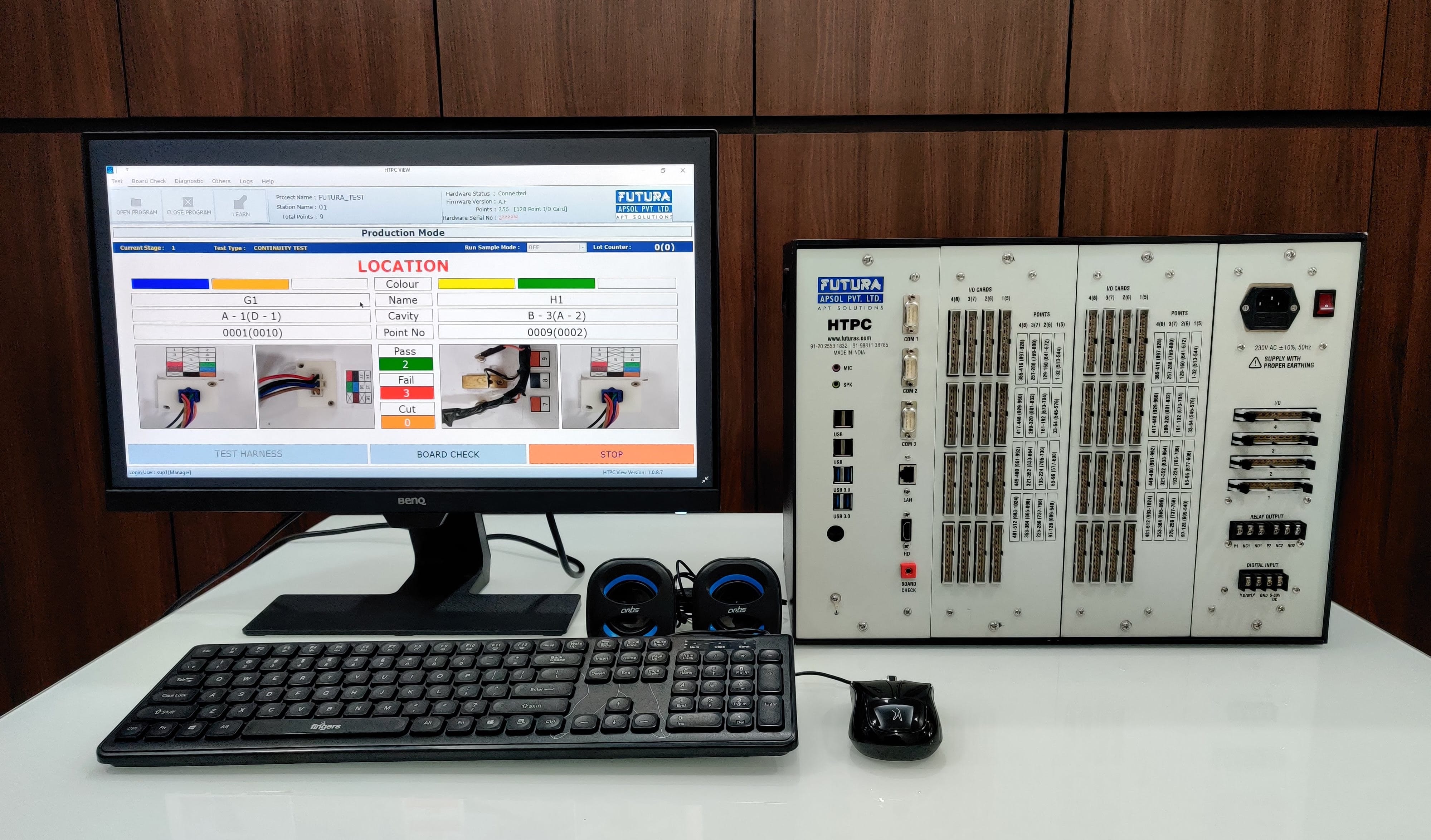
Futura offers wiring harness testers with different test-point capacities and configurations for production testing. Depending on the model, our testers support continuity, diode, resistor, relay, switch, and intermittent testing.
Continuity & Fault Detection
Harness testers perform continuity testing across all points simultaneously to detect open circuits, short circuits, and interchange errors. Advanced models also verify component functionality like diode polarity and resistor values, including intermittent faults.
Flexible Test Configurations
Different test-point capacities and testing functions are available to suit a range of harness testing requirements. Users can configure the tester to match the specific needs of the harness being tested, ensuring accurate and efficient testing across various harness types.
Industrial Quality for Production Testing
Designed for repeatable testing of cable assemblies and wire harnesses in manufacturing environments. These testers are built to withstand the rigors of production lines, providing reliable and consistent results for quality control purposes.
How a Cable Harness Tester Works
Continuity Testing
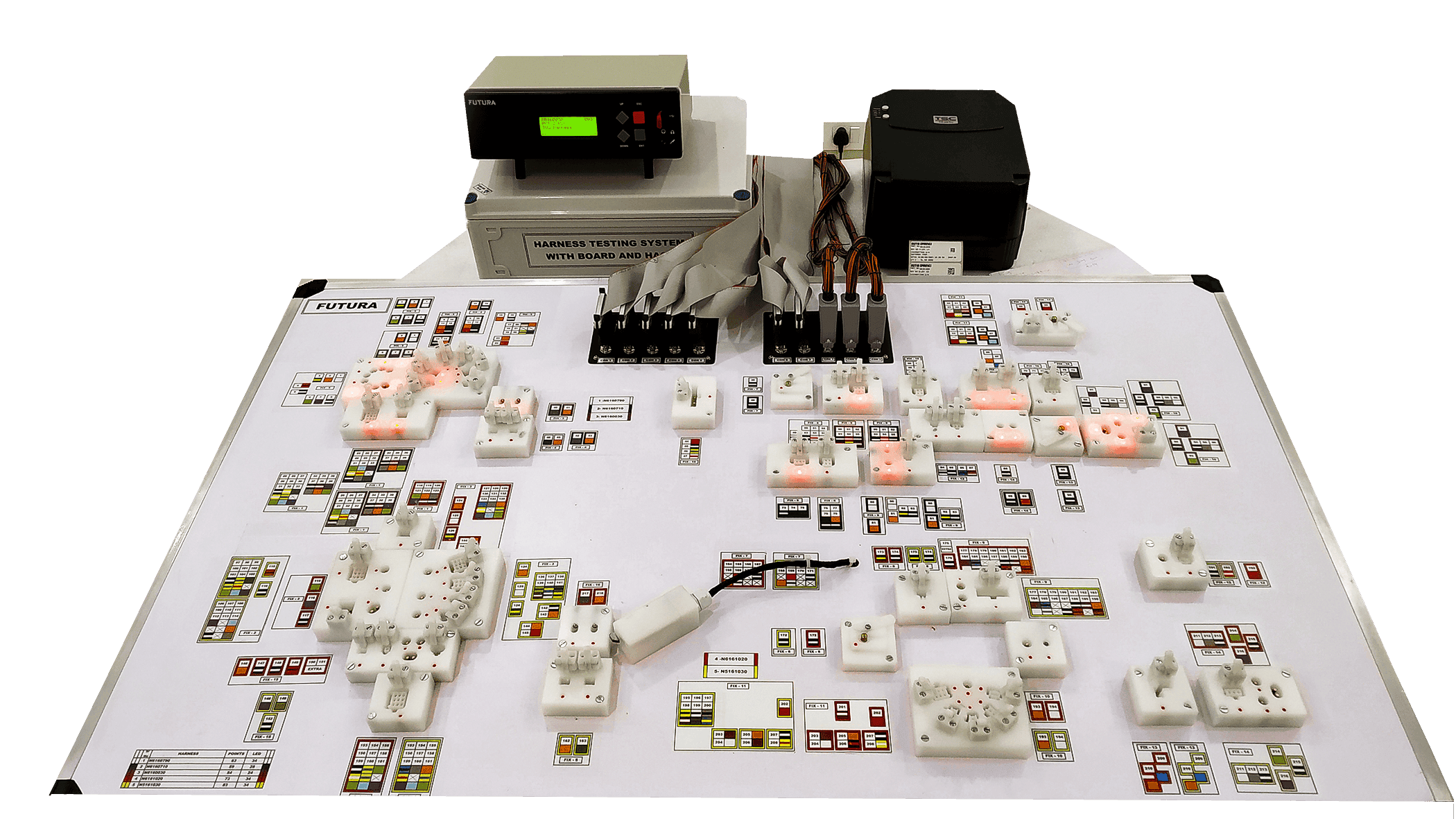
The fundamental operation of a cable harness tester is continuity testing. The harness is connected to the tester through a test board or fixture, and the tester checks every connection against the program or a learnt good harness. If continuity exists where it should, the connection is good; if not, an open circuit is reported. This is repeated across all test points on the harness.
Fault Detection Capabilities
Beyond basic continuity, a wiring harness tester detects open circuits (broken wires), short circuits (unintended connections between pins), interchange errors (wires connected to the wrong terminals) and extra points. Depending on the model, it also checks components such as diode polarity, resistor values and relay operation, and can catch intermittent faults that appear only when the harness is moved.
Common Industries & Applications for Harness Testers
•Automotive wiring harnesses and electrical assemblies
•Railway vehicle cabinets and cable assemblies
•White goods and home appliance wiring
•Industrial machinery electrical connections
•Medical device cable assemblies
•Consumer electronics harnesses and internal wiring
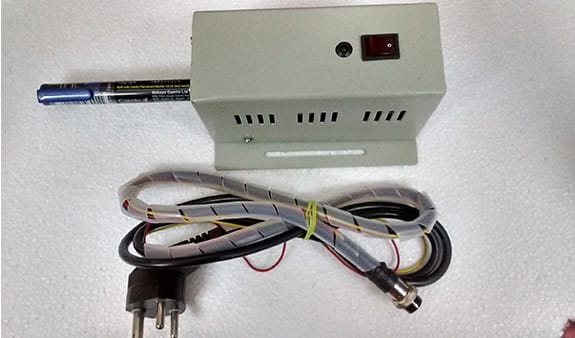
Several accessories that can be connected to our testers
Read more
Contact Us / Request a Quote
Talk to our team about your wiring harness testing, fixtures, and industrial testing requirements. Share a drawing or connector list and we'll recommend the right setup for your line.
 Advanced