ETSA - Electrical Test System for Automobiles
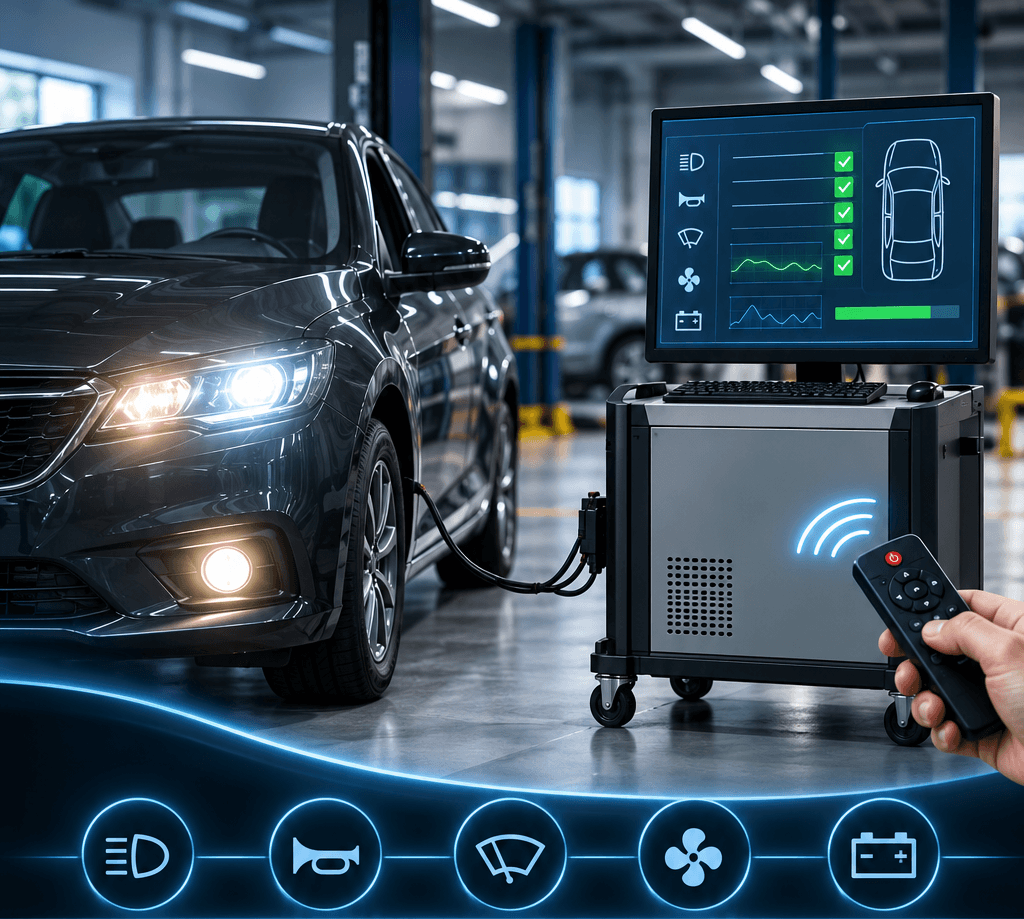
ETSA (Electrical Test System for Automobiles) is presented as an automatic test system for testing electrical parameters or parts in an automobile. Its purpose is to identify potential electrical failures during the testing stage, rather than allowing those failures to appear later in the field.
Why ETSA Is Needed
Potential failures need to be identified at the testing stage rather than as failures in the field. Field failures cost money and can harm the quality reputation of the organization. Quality assurance (QA) of electrical components should be based on measurements rather than simply functional inspection.
Key ETSA Benefits
• Rugged system.\n• Ideally suited for shop-floor functioning.\n• PC-based test system.\n• The vehicle can be connected in less than a minute and testing can be started.\n• No need to disconnect or dismantle anything.
Testing Process and Operator Experience
The presentation emphasizes fast, reliable testing and simple operation on the shop floor. Testing can be navigated using an IR remote control. The presentation compares the ease of operation to switching TV channels. The operator need not leave the vehicle during the test cycle. The system prompts the operator to activate electrical devices one by one. Examples specifically shown include switching on the lights/headlamps and operating the horn.
Electrical Measurement and Monitoring
Dynamic current/voltage monitoring is performed during the test. The system prompts the operator to activate electrical devices sequentially. Numeric measured values are logged for detailed analysis. Measured current values are compared with the user's/specification values. Complex test results are displayed as traffic signals, enabling easy acceptance decisions on the shop floor.
Test Creation and Customization
The presentation explicitly states: 'Design your own tests.' This indicates that ETSA allows tests to be designed according to the required electrical checks.
Quality Information and Traceability
• Test results can be stored.\n• Traceability information can be maintained as required by ISO/QS 9000.\n• Reports can be printed and viewed online.\n• A printed report detailing each electrical parameter measurement is intended to reaffirm customer confidence in the quality system.
Built-in Calibration and Measurement Systems Analysis
ETSA has built-in calibration. The system can be periodically calibrated by the user to ensure accurate and consistent performance. ETSA has been designed and tested using scientific concepts of Measurement Systems Analysis (MSA).
Overall Quality and Business Impact
Potential failures can be located and corrected at the source rather than in the field. The system supports reduction of warranty claims. Measurement-based quality assurance provides recorded electrical values rather than relying only on functional inspection. Traceable test records and printed reports can support confidence in the quality system.
Consolidated ETSA Workflow
1. Connect: Connect the vehicle to the ETSA system in less than a minute without disconnecting or dismantling anything.\n\n2. Start: Start the PC-based automatic testing process.\n\n3. Activate: Follow system prompts to activate electrical devices one by one, such as lights/headlamps and the horn.\n\n4. Monitor: Perform dynamic monitoring of current and voltage during the test.\n\n5. Measure: Capture numeric electrical measurements.\n\n6. Compare: Compare measured current values with specified values.\n\n7. Evaluate: Present complex results using traffic-signal style indications for quick shop-floor acceptance.\n\n8. Record: Log test results and numeric values for detailed analysis and maintain traceability information.\n\n9. Report: View results online and print reports detailing electrical parameter measurements.\n\n10. Improve: Use the testing information to locate and correct potential failures at source, supporting reduced warranty claims.
Contact Us / Request a Quote
Talk to our team about your wiring harness testing, fixtures, and industrial testing requirements. Share a drawing or connector list and we'll recommend the right setup for your line.